MERN Stack Full-Stack Development
Build unified full-stack applications with 100% JavaScript. Tanna Infotech engineers secure databases, RESTful/GraphQL APIs, and dynamic single-page web applications using the MERN stack — shipping 40-60% faster with our advanced AI-assisted coding environment.
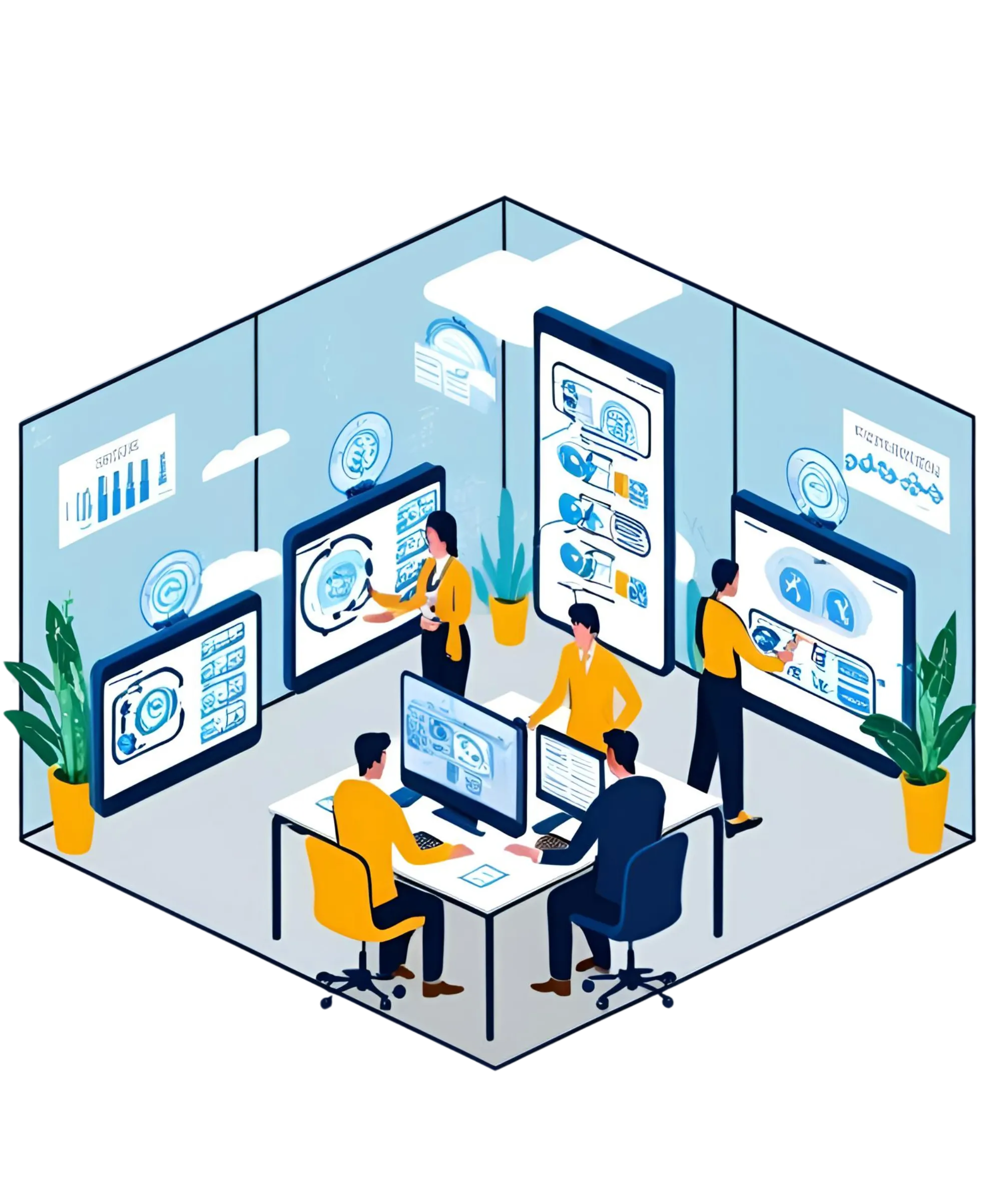
Scalable Full-Stack Engineering
We utilize high-speed NoSQL databases, secure backend routing engines, and modular UI layers to build production-ready applications.
MongoDB Database Architecture
Design secure NoSQL document storage configurations, indexing schemas, data validation layers, and automated backups.
Express.js Routing Engines
Build highly efficient server middleware, endpoint routers, rate limiters, and session trackers for API operations.
React.js Frontend UI
Program interactive user interfaces, CRM panels, charts, state managers (Redux/Zustand), and reusable component hooks.
Node.js Event-Driven Backend
Develop asynchronous backend runtime engines capable of processing millions of concurrent connections cleanly.
REST & GraphQL API Engineering
Structure clean, documented API pipelines allowing seamless data exchanges between frontend React code and databases.
Real-Time WebSockets Sync
Configure Socket.io pipelines for live chat, instant notifications, multi-user collabs, and live dashboards.
Security & JWT Authentications
Enforce JSON Web Token (JWT) session security, password encryption (bcrypt), and CSRF validation policies.
Third-Party API Integrations
Connect Stripe, Salesforce, HubSpot, SendGrid, and shipping APIs directly to your core MERN stack application.
Cloud DevOps Deployment
Configure containerized Docker setups, AWS EC2 configurations, PM2 clustering, and automated CI/CD pipelines.
Our MERN Stack Process
Schema & Relationship Mapping
Planning document structures in MongoDB, scoping indices, and outlining data validation models.
REST / GraphQL API Routing
Setting up Express server structures, planning REST/GraphQL routes, and mapping controllers.
UI Component Scaffolding
Coding modular React layouts, wireframing dashboards, and integrating central state hubs (Redux/Zustand).
End-to-End API Integration
Syncing frontend hooks to Node.js backend controllers, validating models, and applying security checks.
Docker Setup & AWS Launch
Configuring PM2 clustering, containerizing database & server code using Docker, and setting DNS endpoints.
Why Outsource MERN Development?
🤖 AI-Supercharged JavaScript Engineers
MERN stack is the preferred technology stack for high-performance dashboards and SaaS apps. By training our JavaScript developers in advanced AI editors (Cursor, Copilot, Claude), we produce clean controller code, write database schemas, and deploy servers 40-60% faster, saving you 50-70% on local engineering budgets.
Single-Language Efficiency
Using JavaScript from database queries (MongoDB) to frontend layout (React) eliminates context switching.
High Database Scalability
MongoDB's flexible document structure scales horizontally, handling massive user databases without schema blockages.
Rapid MVP Scaffolding
JavaScript libraries allow quick UI renders and rapid endpoint scripting to validate business models fast.
Active Global Talent Pool
JavaScript has the largest community worldwide, ensuring long-term code maintainability and scaling.
Secure Token Authentication
Bespoke JWT structures encrypt user data and keep sessions strictly authenticated across nodes.
High Concurrent Operations
Node.js non-blocking I/O model handles data-heavy, real-time requests without memory leaks.
Technologies We Use
MERN Stack FAQs
1. What does MERN stand for?
MERN is a full-stack JavaScript architecture consisting of MongoDB (NoSQL database), Express.js (backend web application framework), React.js (frontend UI library), and Node.js (event-driven backend server runtime environment).
2. Why choose MERN over PHP/LAMP stack?
MERN uses JavaScript end-to-end, meaning developers write both frontend and backend scripts in the same language. It is optimized for real-time applications (chat, notifications, dashboards) and scales horizontally on NoSQL structures, whereas LAMP is optimized for traditional content-heavy portals.
3. How do you ensure MongoDB database security?
We enforce network access controls (restricting MongoDB access to the Node.js server IP), implement user role validations, encrypt connections using SSL/TLS, encrypt sensitive documents (like passwords using bcrypt), and configure automatic database backups on secure AWS buckets.
4. Can MERN stack applications scale for millions of users?
Yes. MongoDB is designed to support horizontal scaling via sharding, and Node.js handles thousands of concurrent requests using an event-driven, non-blocking I/O loop. We also set up PM2 process clustering and AWS load balancing to scale seamlessly.
5. Do you build REST APIs or GraphQL pipelines?
We build both. For most applications, REST APIs are standard. For complex dashboards with highly nested database relationships, we implement GraphQL with Apollo Client, allowing the React frontend to query specific database fields efficiently.
6. Who owns the final MERN application code?
You do. All source code, database structures, Docker scripts, and server credentials are 100% transferred to you upon project delivery. We sign NDAs before any scoping begins.
Related Services
Everything you need — from one expert team.