AI Tool Development & Business Integration
Transform your operations and build custom intelligence. We offer end-to-end AI tool development, Large Language Model (LLM) integration, and cognitive AI automation integration to optimize business workflows, cut manual overheads, and unlock predictive insights.
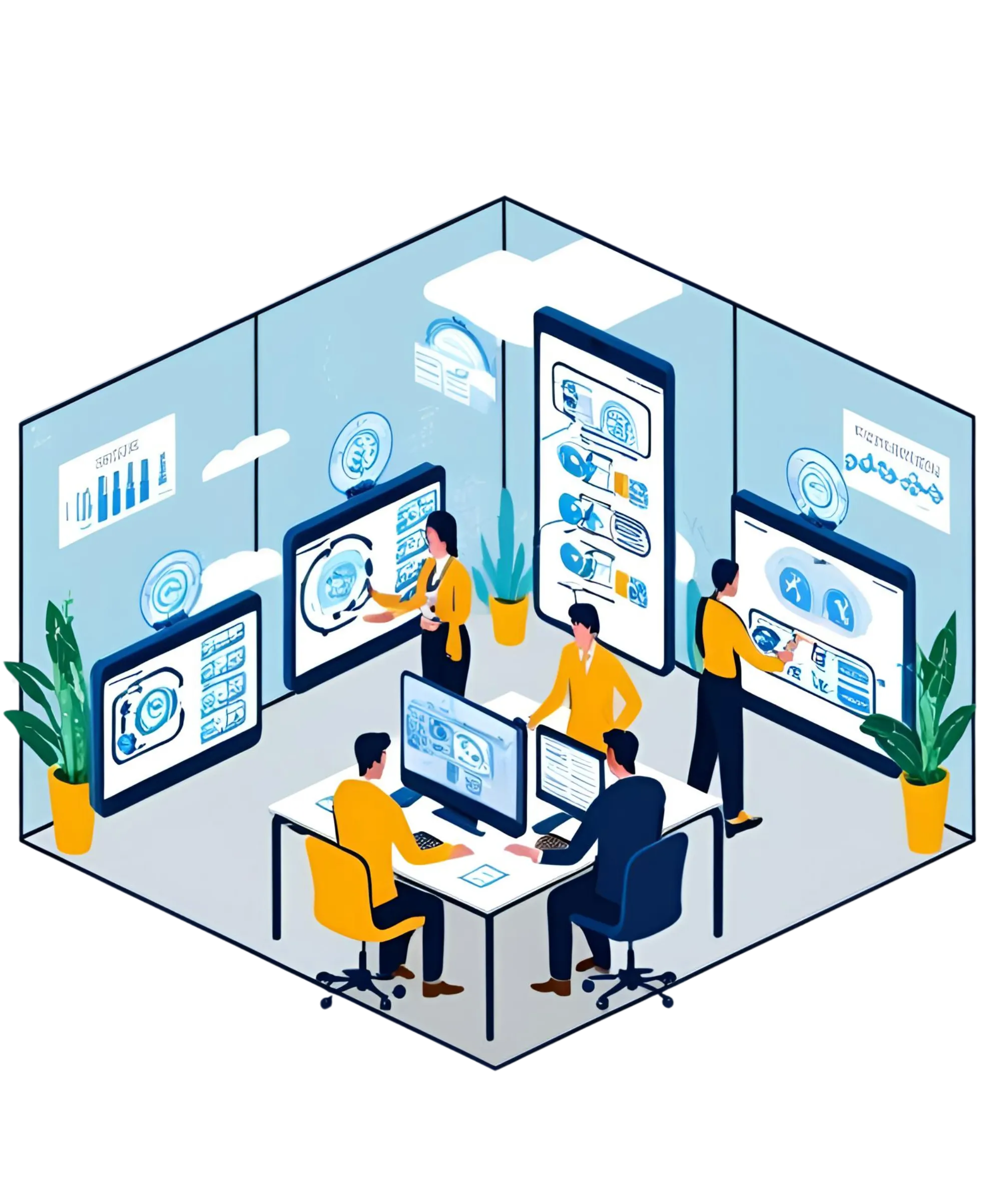
Custom AI Engineering & Solutions
We help global brands, startups, and enterprises develop next-generation AI tools and integrate smart automations into legacy systems.
Custom AI Tool Development
Build tailormade SaaS tools powered by generative AI, neural networks, or machine learning models designed for your niche.
AI Integration in Business
Connect OpenAI, Claude, Llama 3, or custom APIs directly to your current ERP, CRM, databases, and client dashboards.
AI Automation Integration
Replace repetitive operations with smart workflows that classify data, extract metadata, draft replies, and route cases automatically.
Intelligent AI Agents & Chatbots
Create semantic, context-aware chatbot support systems trained on your company knowledge bases and API integrations.
Semantic Search & Vector DBs
Configure high-performance database searches using vector embeddings (Pinecone, pgvector) for instant context retrieval.
Predictive Analytics Systems
Engineer forecasting algorithms and dashboard metrics that predict customer churn, sales trends, and resource demand.
Cognitive Document Extraction
Parse and extract fields from PDFs, contracts, receipts, and invoices using advanced OCR and LLM prompting pipelines.
Smart Recommendation Engines
Build personalization pipelines that analyze user click patterns and recommend items, products, or files dynamically.
Fine-Tuning & Model Training
Tune open-source models (like Llama or Mistral) on custom datasets to provide domain-specific answers securely.
Our AI Integration Process
Discovery & AI Feasibility Study
Analyzing your workflows, assessing database health, and identifying high-impact areas for AI automation and tools.
Model Selection & Architecture
Deciding between proprietary APIs (OpenAI GPT-4, Anthropic Claude) vs self-hosted open-source models (Llama 3, Mistral).
Prototyping & Prompt Engineering
Setting up initial proof of concepts, formatting context prompt structures, and checking response quality in sandboxes.
Secure Integration & Tuning
Connecting the AI tool to your system via REST APIs, configuring secure vector storage, and fine-tuning on custom documents.
Compliance & Continuous Optimization
Implementing guardrails, filtering outputs, running safety checks, and continuously monitoring model accuracies post-launch.
Enterprise-Grade AI Security
🔒 100% Data Privacy & Secure Workspaces
We understand data sovereignty is a priority. When deploying AI tool development for corporate business, we build private, secure integrations. Your proprietary company data is never used to train public foundational models, and all vector storages and API channels are strictly encrypted.
Self-Hosted Model Deployment
Deploy open-source LLMs on your private AWS or Azure cloud to ensure zero external data transmission.
Strict NDA & IP Ownership
Full custom codebases, API prompts, fine-tuning scripts, and vector structures are 100% owned by you.
Hybrid Cloud Configurations
Configure local caching and offline processing layers to protect highly sensitive enterprise tables.
Structured Prompt Guardrails
Enforce validation layers that filter inappropriate inquiries, protect API keys, and block jailbreaks.
Seamless Legacy Connectors
Integrate intelligence directly into legacy systems (PHP, SQL, .NET) via secure REST API gateways.
Cost Monitoring & Rate Limits
Configure automatic alerts, token budgets, caching systems, and user rate limits to prevent surprise API invoices.
Technologies We Utilize
AI Integration FAQs
1. What types of AI models do you work with?
We work with proprietary foundational APIs like OpenAI (GPT-4), Anthropic (Claude), and Google (Gemini). Additionally, we implement and fine-tune open-source models like Meta's Llama 3, Mistral, and specialized BERT variants depending on cost, quality, and latency requirements.
2. How do you guarantee our business data remains private?
We set up private API setups where data is processed in stateless sessions (and not logged or used for model retraining by providers). For maximum privacy, we host open-source LLMs on your dedicated AWS/Azure instances so no corporate database record ever leaves your servers.
3. What is the difference between OpenAI API integration and custom fine-tuning?
OpenAI integration connects a pre-trained model to your app and uses techniques like RAG (Retrieval-Augmented Generation) to feed it context. Fine-tuning adjusts the model's inner weights on your custom formatting, vocabulary, and styling guidelines, which is great for specialized, repetitive domain tasks.
4. How long does an AI tool development project take?
A functional proof-of-concept integrating an LLM API takes 2-4 weeks. Constructing comprehensive enterprise automation platforms, configuring semantic vector pipelines, or fine-tuning models takes 2-4 months.
5. Can you integrate AI into our existing business software?
Absolutely. We build custom backend middleware in Node.js or Python that acts as an intelligent router, bridging your legacy database (MySQL, PostgreSQL, Oracle) or ERP/CRM systems to the AI API layer seamlessly.
6. How do you manage ongoing API token costs?
We optimize token usage through semantic search caching (preventing repeat queries from hitting API endpoints), prompt compression, and routing simple tasks to cheaper models, saving clients up to 50-70% on monthly inference expenses.
Related Services
Everything you need — from one expert team.